Decades-old software is a quiet liability for many businesses. Slow performance, ballooning maintenance costs, and poor integration with modern tools create compounding problems that are hard to ignore. Legacy software modernization addresses these issues directly, helping organizations replace or upgrade aging systems without triggering costly downtime or disrupting the teams that rely on them daily. Understanding which application modernization tools and strategies apply to your situation is the first step toward making that shift confidently.
Not every modernization effort requires rebuilding from scratch, and the right approach depends heavily on what a business already has in place. CodeGiant's enterprise AI platform helps teams assess existing systems, identify what needs to change, and move forward in ways that fit their budget and timeline.
Table of Contents
-
What Is Legacy Software, and Why Is Modernizing It Important?
-
What are the Signs That Show a Legacy Software Needs Modernization?
-
Can AI Accelerate Legacy Software Modernization?
-
10 Steps for Successful Legacy Software Modernization
-
How to Measure the Success of a Legacy Software Modernization Project
-
How CodeGiant Helps Enterprises Modernize Legacy Software Faster
-
Try CodeGiant's Enterprise AI Platform Today
Summary
-
Legacy software modernization is primarily a financial and strategic issue before it becomes a technical one. Research from DreamFactory shows that organizations spend up to 80% of their IT budgets on maintaining existing systems, leaving little room to build new capabilities. That ratio does not improve on its own, and every year a modernization project stalls, the cost of inaction compounds.
-
The workforce dimension of legacy dependency is one of the least discussed risks in modernization planning. Specialists in older languages and proprietary frameworks are retiring faster than organizations can document what those systems do, and when that institutional knowledge leaves, the remaining team inherits infrastructure they can maintain but not fully understand. That knowledge gap slows both troubleshooting and any future modernization effort.
-
AI-assisted modernization changes the timeline in ways that make the business case concrete rather than theoretical. DreamFactory's research indicates that AI-assisted code migration can reduce project timelines by up to 50%, meaning a four-year initiative can realistically be completed in two, with fewer errors and less accumulated risk along the way. The difference is not raw speed but accuracy at scale, particularly in the discovery phase where human reviewers miss dependencies and misread business logic in large, undocumented codebases.
-
Security exposure in legacy environments is not a future risk but a present one. Saritasa's 2025 survey of over 500 U.S. IT professionals found that 62% of IT teams still rely on outdated legacy systems, many of which carry unpatched vulnerabilities that remain open for months or years because updating one component risks destabilizing others. Compliance teams then spend disproportionate effort generating audit documentation from systems that were never designed to meet current regulatory standards.
-
Modernization does not require replacing everything at once, and organizations that treat it as an incremental, governed process consistently outperform those attempting wholesale rebuilds. DreamFactory's research shows that legacy modernization projects can reduce operational costs by up to 30%, but that figure only materializes when teams extend existing foundations rather than discarding them. The enterprises achieving those results maintained compliance and operational continuity throughout the process, not just at the end.
-
Deloitte research indicates that enterprises allocate around 57% of IT budgets to keeping outdated platforms operational, underscoring how deeply legacy preservation crowds out competitive investment. The cost of patching around aging architecture is not just financial. It slows product releases, limits integration options, and keeps skilled developers focused on maintenance rather than on building new capabilities. That opportunity cost is harder to measure but just as real.
-
CodeGiant's enterprise AI platform addresses this directly by combining logic extraction, dependency resolution, and automated migration pipelines into a governed process, so teams can extend existing infrastructure and build new capabilities on top of what already runs the business.
What Is Legacy Software, and Why Is Modernizing It Important?
Legacy software is any application your organization depends on every day, but that no longer meets current technology, security standards, or business demands. It still runs and processes transactions, but it costs more to maintain than to improve, and it blocks modernization initiatives before they ever get off the ground.
💡 Definition: Legacy software isn't just old software — it's software that has become a liability. If it's consuming resources, resisting change, and preventing growth, it qualifies — regardless of its age.
|
Characteristic |
Legacy Software |
Modern Software |
|---|---|---|
|
Maintenance cost |
High — consumes budget |
Low — built to scale |
|
Security posture |
Vulnerable, outdated |
Continuously patched |
|
Integration capability |
Limited or broken |
API-first, flexible |
|
Business agility |
Blocks new initiatives |
Enables rapid change |
The financial impact is serious. According to DreamFactory's Legacy System Modernization Statistics, 70% of IT budgets are spent maintaining legacy systems: preservation, not investment. Every dollar spent on old architecture is a dollar not spent building the capabilities your competitors are already shipping.
"70% of IT budgets are spent maintaining legacy systems — preservation, not investment." — DreamFactory, Legacy System Modernization Statistics
⚠️ Warning: When the majority of your IT budget goes toward keeping the lights on, your organization loses its ability to innovate, compete, and grow. Legacy maintenance isn't a neutral cost; it's an active drag on your business.
🔑 Takeaway: Modernizing legacy software isn't a technical decision—it's a strategic investment that frees up budget, reduces risk, and unlocks the capabilities your business needs to move forward.
What makes legacy software so hard to walk away from?
The same issue surfaces in financial services, government, and manufacturing: systems carrying the most business-critical weight are also the most expensive to replace. A mainframe processing millions of transactions daily, a custom claims platform built in the early 2000s, a warehouse management system nobody fully understands because the original developers retired years ago. These systems aren't broken—they're deeply embedded, which makes them expensive to ignore and risky to modify.
Why does legacy software modernization stall on technical debt?
Most organizations fix problems around the edges by adding middleware connectors and newer interfaces to old foundations. As integration demands grow and security requirements tighten, workarounds accumulate into technical debt. Our enterprise AI platform helps organizations build new capabilities, APIs, and automations on top of existing systems rather than forcing complete replacement, preserving operational continuity while closing the gap between business needs and architectural capacity. CodeGiant makes this approach accessible and scalable.
Why modernization is a business decision, not just a technical one
Saritasa's Legacy Software Modernization Survey of 500+ U.S. IT Pros found that 62% of IT teams still use outdated legacy systems. The problems extend beyond technology: slower product releases, failed integrations, compliance exposure, and talented developers maintaining code instead of building new features. Organizations running modern, cloud-native architectures ship features in days, while those defending legacy infrastructure measure the same cycles in months.
Does Legacy Software Modernization have to mean starting from scratch?
A widespread assumption holds that modernization requires starting over—a clean-slate rebuild demanding years of effort and enormous execution risk. Incremental transformation, which extends and evolves existing systems rather than discarding them, is both lower risk and faster to value. Your existing systems don't need to be erased. They need to be unlocked. But knowing modernization is necessary differs from knowing when your specific systems have crossed from manageable to urgent.
What are the Signs That Show a Legacy Software Needs Modernization?
Recognizing when a system needs modernization is rarely dramatic. Instead, it's a pattern of friction that teams get used to over time—small delays, workarounds, and repeated fixes that quietly add up into structural problems.
"The most dangerous legacy systems aren't the ones that are visibly broken — they're the ones that seem to be working, while quietly accumulating technical debt beneath the surface." — Software Engineering Wisdom
⚠️ Warning: Teams often normalize dysfunction over time. If your developers are spending more time on workarounds and patches than on new features, that's a critical signal your system is overdue for modernization.
💡 Key Signs to Watch For: Legacy software typically reveals its age through a recognizable set of warning patterns:
|
Warning Sign |
What It Looks Like |
Risk Level |
|---|---|---|
|
Frequent system downtime |
Recurring crashes or outages |
🔴 High |
|
Slow performance |
Delayed load times, bottlenecks |
🟠 Medium-High |
|
Costly maintenance |
More fixes than new features |
🔴 High |
|
Integration failures |
Can't connect with modern tools |
🟠 Medium-High |
|
Security vulnerabilities |
Outdated patches, compliance gaps |
🔴 Critical |
|
Developer workarounds |
Repeated manual fixes and hacks |
🟡 Medium |
🎯 Key Takeaway: Structural problems in legacy systems don't appear overnight — they're the cumulative result of ignored friction signals that compound quietly until the cost of inaction far exceeds the cost of modernization.

Frequent downtime signals deeper instability
The failure point is usually not a single catastrophic crash, but the third outage this quarter, the fourth emergency patch this month, the fifth time a critical process stalls under routine load. One major shipping company discovered this when ransomware exploited legacy vulnerabilities, halting operations worldwide and resulting in approximately $300 million in losses. Repeated instability signals a deeper problem.
When does legacy software modernization become a budget emergency?
When maintenance consumes more of your budget than creating new things, the math works against you. Deloitte research shows that companies spend around 57% of their IT budgets on maintaining legacy platforms, leaving little for competitive investment. Every dollar spent fixing a weak system is a dollar not spent on building what comes next.
How do patch-on-patch dependencies make the problem worse over time?
Most teams fix individual problems rather than address the underlying structure. As integration demands grow and data volumes increase, those fixes multiply into dependencies that make every future change slower and riskier. An enterprise AI platform like CodeGiant addresses this by enabling teams to build new capabilities on top of existing infrastructure rather than dismantling it, reducing the fragile accumulation of patch-on-patch fixes that drains budgets and confidence.
Security gaps that compliance cannot paper over
According to Saritasa's 2025 survey of over 500 U.S. IT professionals, 62% of IT teams still use outdated legacy systems. Security vulnerabilities remain unfixed for months or years because updating one component risks breaking others. Compliance teams spend considerable time creating audit reports from systems never designed to meet current regulations, transforming governance into a risky, manual task with legal and financial consequences that often appear as IT problems.
Talent scarcity accelerates the timeline
Experts in COBOL, older ERP frameworks, and custom-built software are retiring faster than organizations can document what those systems do. When knowledge held by a single person leaves with a retiring engineer, the remaining team inherits a system they can operate but not fully understand. This knowledge gap slows troubleshooting and complicates modernization, since you cannot confidently change what you cannot fully map.
Related Reading
- Build Internal Tools
- Mainframe To Cloud Migration
- Legacy Software Modernization
- Cobol To Java
- Build Internal Tools
- Application Modernization Best Practices
- Technical Debt Management
- Ai Governance
- Legacy System Modernization
Can AI Accelerate Legacy Software Modernization?
AI fundamentally changes what's possible in legacy software modernization within the same budget and timeline that once seemed impossible to achieve.
"AI-assisted code modernization can reduce migration time by up to 50%: compressing a four-year project into two years with fewer errors and less accumulated risk." — DreamFactory Legacy System Modernization Statistics
🎯 Key Point: This isn't a marginal improvement. Cutting timelines in half represents a fundamental shift in what modernization teams can deliver.
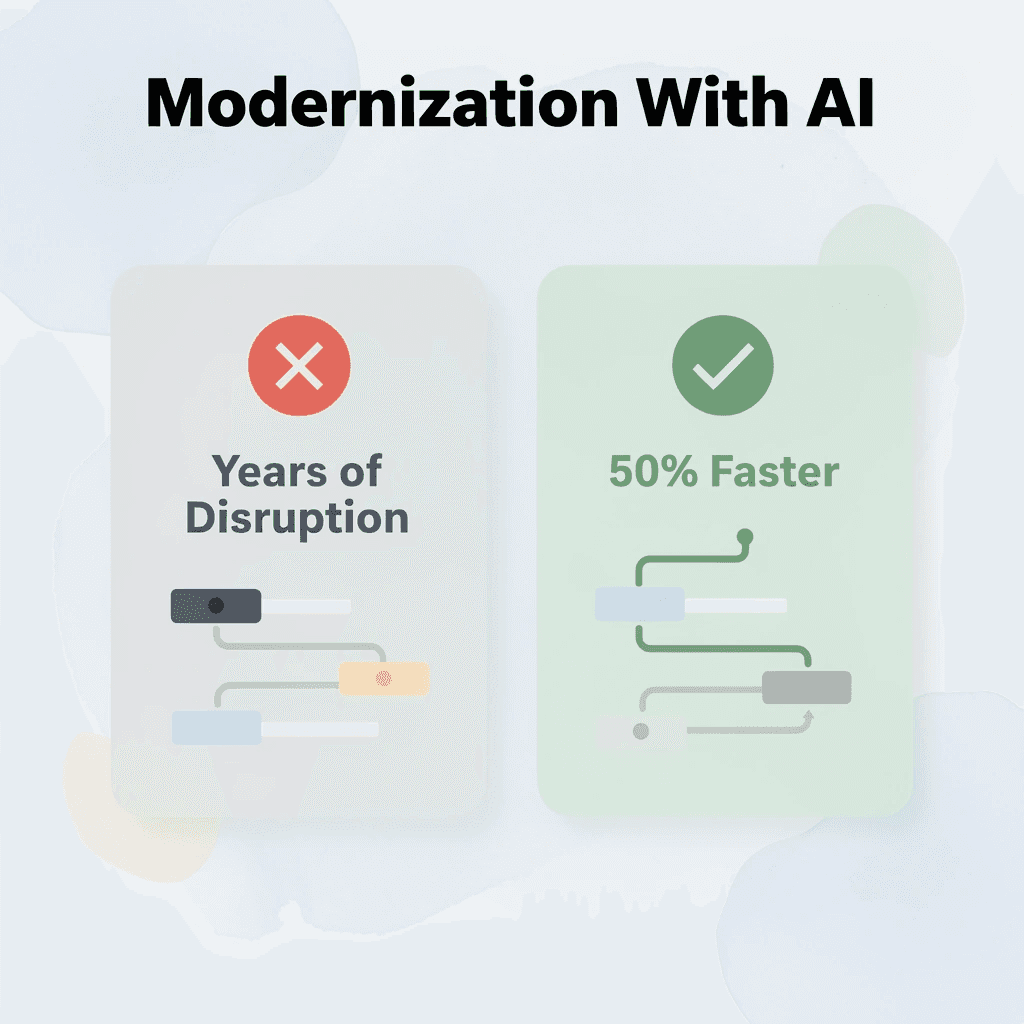
Traditional modernization requires putting together large teams, running thorough manual code reviews, and accepting years of disruption. According to DreamFactory's Legacy System Modernization Statistics, AI-assisted code modernization can reduce migration time by up to 50%—compressing a four-year project into two years with fewer errors and less accumulated risk.
|
Modernization Approach |
Estimated Timeline |
Key Risk Level |
|---|---|---|
|
Traditional Manual Process |
4+ years |
High — accumulated errors over time |
|
AI-Assisted Modernization |
~2 years |
Significantly reduced — fewer manual touchpoints |
🔑 Takeaway: The 50% reduction in migration time isn't just a speed win—it directly shrinks the window of accumulated risk, budget overrun, and team burnout that typically derails legacy modernization efforts.
⚠️ Warning: Organizations that ignore AI-assisted approaches risk locking themselves into outdated timelines and cost structures that are no longer competitively viable.
Why does AI handle legacy software modernization more accurately at scale?
The critical difference is not raw speed but accuracy at scale. A human developer reviewing 20,000 lines of undocumented COBOL code will miss dependencies, misread the business logic, and make assumptions that lead to downstream problems. AI scans the same codebase in hours, maps every relationship, flags hidden dependencies, and generates trustworthy documentation. Refactoring decisions built on accurate maps prove fundamentally more reliable than those built on educated guesses.
How do modern platforms close the discovery gap that traditional teams face?
Most teams handle discovery by having experienced engineers read old code and talk to the original builders—often people who have retired or moved on. This approach fails once the codebase exceeds what any one person can understand, stalling projects. Platforms like CodeGiant solve this by helping companies extract information, map it, and build on existing systems without having to replace them. This enables teams to move from discovery to production-quality output while maintaining the compliance and control that regulated industries require.
Does the business case actually hold up?
The numbers are specific. DreamFactory's research shows that organizations spend up to 80% of their IT budgets maintaining legacy systems. Each year a modernization project is delayed, the costs increase. AI-driven approaches compress the timeline in which costs accumulate while reducing the manual work that inflates budgets.
How does Legacy Software Modernization change the competitive timeline?
The business case extends beyond cost savings to expanded choice. When modernization takes three years instead of six, organizations can reach new capabilities and respond to competitive pressure twice as fast. This speed comes from AI-assisted discovery, automated refactoring, and intelligent test generation working together as a governed process.
Where does the risk profile shift during Legacy Software Modernization?
The risk profile changes when AI handles tasks humans perform poorly, a reality that often emerges when modernization projects encounter their first significant problem.
Related Reading
- As400 Modernization
- Enterprise Ai Governance
- Public Sector Digital Transformation
- Mendix Alternatives
- OutSystems Alternatives
- Appian Pricing
- Ai Agent Pricing
- Outsystems Vs Mendix
10 Steps for Successful Legacy Software Modernization
Legacy software modernization is a strategic process that improves performance, security, scalability, and maintainability while preserving critical business logic. The most successful projects follow a structured roadmap that reduces risk, minimizes disruption, and delivers measurable business value.
"Organizations that follow a structured modernization roadmap are significantly more likely to deliver on time, on budget, and with measurable ROI compared to those that modernize without a plan." — Industry Best Practice Research
|
Modernization Goal |
Business Benefit |
|---|---|
|
Performance Improvement |
Faster systems, better user experience |
|
Security Upgrades |
Reduced vulnerability and compliance risk |
|
Scalability |
Supports growth without re-architecture |
|
Maintainability |
Lower long-term operational costs |
|
Business Logic Preservation |
Zero loss of critical institutional knowledge |
💡 Tip: Before launching any modernization initiative, always document your existing business logic thoroughly — it is the single most valuable asset your legacy system contains.
⚠️ Warning: Skipping a structured roadmap is the most common reason legacy modernization projects fail. Ad hoc approaches lead to cost overruns, extended timelines, and business disruption that could have been avoided.
🎯 Key Point: Legacy software modernization is not just a technical upgrade — it is a strategic business investment that, when executed with a clear plan, delivers long-term competitive advantage and reduced operational risk.
1. Conduct a comprehensive assessment of existing systems
Make a list of all old applications, databases, and infrastructure. Map their connections, assess code quality, identify performance bottlenecks, determine scalability constraints, and uncover security vulnerabilities and maintenance costs. Use static code analysis tools and consult stakeholders to prioritize business-critical functions and obsolete features. This reveals risks such as outdated programming languages or unsupported hardware and establishes priorities for modernization efforts with the greatest impact.
2. Align modernization efforts with clear business objectives
Set clear, measurable goals that connect to your organization's needs: improving customer satisfaction, streamlining operations, adopting cloud technology, or ensuring compliance. Involve business leaders, IT teams, and end users in defining success metrics such as reduced downtime or faster time-to-market. This alignment ensures every step delivers real value.
3. Create a detailed modernization roadmap
Create a phased plan outlining timelines, budgets, resource requirements, milestones, and risk mitigation strategies. Break the project into manageable segments with clear dependencies and contingency options. Include cost-benefit analyses and prioritize quick wins to build momentum. A structured roadmap minimizes business disruption and enables iterative adjustments based on early results.
4. Select the appropriate modernization strategy
Consider options such as rehosting (moving to the cloud without major changes), replatforming (making minor improvements), refactoring (improving the code), rebuilding, or replacing with ready-made solutions. Evaluate your system's complexity, your team's skills, budget constraints, and long-term goals. Many companies use frameworks like the 7 Rs (Retain, Rehost, Replatform, Refactor, Repurchase, Retire, Reimagine) to guide this decision. The best choice balances speed, risk, and expected benefits.
5. Prioritize applications and components for modernization
Rank systems by business value, technical debt, risk of failure, and modernization feasibility. Prioritize high-impact, lower-risk areas that demonstrate success quickly. Create a prioritization matrix weighing criteria such as user dependency and integration points. This approach delivers incremental value and manages resources effectively.
6. Develop a robust data migration and integration plan
Data is often the most critical element in legacy systems. Assess the quality, volume, structure, and relationships of your data. Then plan the migration, including data cleaning, format conversion, validation, and secure transfer. Establish connections between old and new systems using APIs or middleware to maintain continuity. Comply with regulations like GDPR or HIPAA, and employ strategies such as parallel running or phased rollouts to prevent data loss or corruption.
7. Implement incrementally using a phased approach
Use a step-by-step rollout rather than replacing everything at once to reduce risk and learn as you go. Use patterns like the Strangler Fig, in which new, modern parts gradually replace old ones while the system continues to operate. Test each step in staging environments that mirror production and gather feedback before proceeding. This enables continuous value delivery and simplifies problem resolution.
8. Emphasize security, compliance, and thorough testing
Build security into your plan from the beginning using vulnerability scanning, access controls, encryption, and zero-trust architectures. Test your work at multiple levels: unit, integration, regression, and user acceptance testing. Include load testing and stress testing for unusual scenarios. Ensure compliance with all applicable regulations and maintain comprehensive records. Automated testing tools and CI/CD pipelines accelerate deployment and reduce human error.
9. Invest in team training and organizational change management
Modernization affects people as much as technology. Provide complete training on new tools, languages, and software development approaches (such as microservices or cloud platforms), along with DevOps practices. Create a change management strategy with clear communication and early employee involvement. Consider knowledge transfer sessions or external experts to address skill gaps. Engaged teams are more likely to adopt new systems successfully.
10. Monitor performance, optimize continuously, and plan for future evolution
After you launch your system, set up strong monitoring using key performance indicators (KPIs) to track reliability, scalability, user satisfaction, and cost efficiency. Use analytics tools to identify opportunities for improvement and resolve emerging issues quickly. Built-in the ability to make ongoing updates, such as adding serverless or AI-enhanced features. Regular reviews ensure the modernized system continues delivering value as your business needs evolve.
How to Measure the Success of a Legacy Software Modernization Project
Finishing a legacy software modernization project is only half the challenge. Success means the modernized system delivers meaningful business improvements, makes operations run better, and creates long-term value. By tracking the right metrics before, during, and after modernization, organizations can figure out whether their investment achieved its intended outcomes and find opportunities for continuous improvement.
"Modernization is not complete at go-live — it is validated through the measurable business outcomes it delivers over time." — Industry Best Practice
🎯 Key Point: Success measurement must begin before the project starts — establishing baseline metrics is essential for proving the value of modernization after the fact.
⚠️ Warning: Organizations that skip pre-modernization benchmarking often struggle to demonstrate ROI, even when the modernized system is performing significantly better than the legacy one.
|
Measurement Phase |
Focus Area |
Why It Matters |
|---|---|---|
|
Before Modernization |
Baseline performance, costs, and downtime |
Sets the benchmark for comparison |
|
During Modernization |
Milestones, budget adherence, risk |
Ensures the project stays on track |
|
After Modernization |
Business outcomes, user adoption, ROI |
Confirms long-term value delivered |
Calculate Return on Investment and Cost Savings
Determine the overall financial impact by comparing all project costs—development, migration, training, and infrastructure—against benefits such as reduced licensing fees, lower hardware and maintenance costs, and decreased operational overhead. Track metrics like total cost of ownership (TCO) reduction (targeting 20-45% savings), payback period (typically 12-36 months), and ongoing annual savings from retiring legacy environments. Use before and after modernization audits to verify figures and capture both direct savings and indirect gains from freed-up resources.
Measure Improvements in System Performance and Scalability
Look at key technical metrics such as system response time, throughput, latency, availability, and scalability. Updated systems should respond faster, eliminate bottlenecks, and scale automatically with cloud-based architectures. Conduct load tests and track metrics such as mean time between failures and mean time to repair. These improvements enhance the user experience and enable future growth without proportional increases in cost.
Evaluate Reduction in Technical Debt and Maintenance Efforts
Measure reductions in code complexity, reliance on legacy technologies, and time spent on routine fixes and patches. Track metrics including maintenance hours per month, bug-fix velocity, and the percentage of deprecated components retired. Successful projects yield cleaner architectures, such as microservices, enabling faster and safer updates. Lowering technical debt accelerates developer productivity and mitigates long-term risks posed by unsupported platforms and security vulnerabilities.
Track User Satisfaction and Adoption Rates
Collect feedback using surveys, Net Promoter Scores (NPS), session duration, bounce rates, and feature usage data. Track adoption rates, training completion rates, and resistance to change. Higher satisfaction typically indicates ease of use, performance, and valuable features such as mobile access or real-time updates. Strong user engagement demonstrates that modernization has delivered practical value.
Assess Business Agility and Time-to-Market Enhancements
Measure how quickly the organization can deploy new features, respond to market changes, or integrate with other systems via APIs. Key indicators include reduced development cycle times (often 2-6x faster), release frequency, and new business capabilities enabled, such as advanced analytics or AI integrations. This metric validates that the modernized platform supports innovation and competitive positioning.
Monitor Security, Compliance, and Risk Reduction
Look at incident frequency, vulnerability counts, compliance audit results, and security improvements. This includes adopting modern standards like zero trust and automated threat detection. Track metrics such as security incident volume and compliance reporting timelines. Good modernization should lower breach risks, simplify regulatory adherence, protect against costly penalties and reputational damage, and build stakeholder confidence.
Analyze Operational Efficiency and Productivity Gains
Look at how processes improved by checking automation levels, employee productivity (tasks finished per hour), error reduction (often 50-80% fewer outages), and resource utilization. Compare before-and-after data across departments to ensure efficiency gains directly benefit the company's bottom line.
Review Long-Term Strategic Outcomes and Sustainability
Look at bigger impacts like digital changes enabled, improved data access for analysis, and platform readiness for new technologies. Long-term success requires maintaining strong performance metrics, preventing recurring issues, and preserving organizational learning for future projects. Regular check-ins at 6, 12, and 24 months after launch confirm sustained value and identify opportunities for improvement.
How CodeGiant Helps Enterprises Modernize Legacy Software Faster
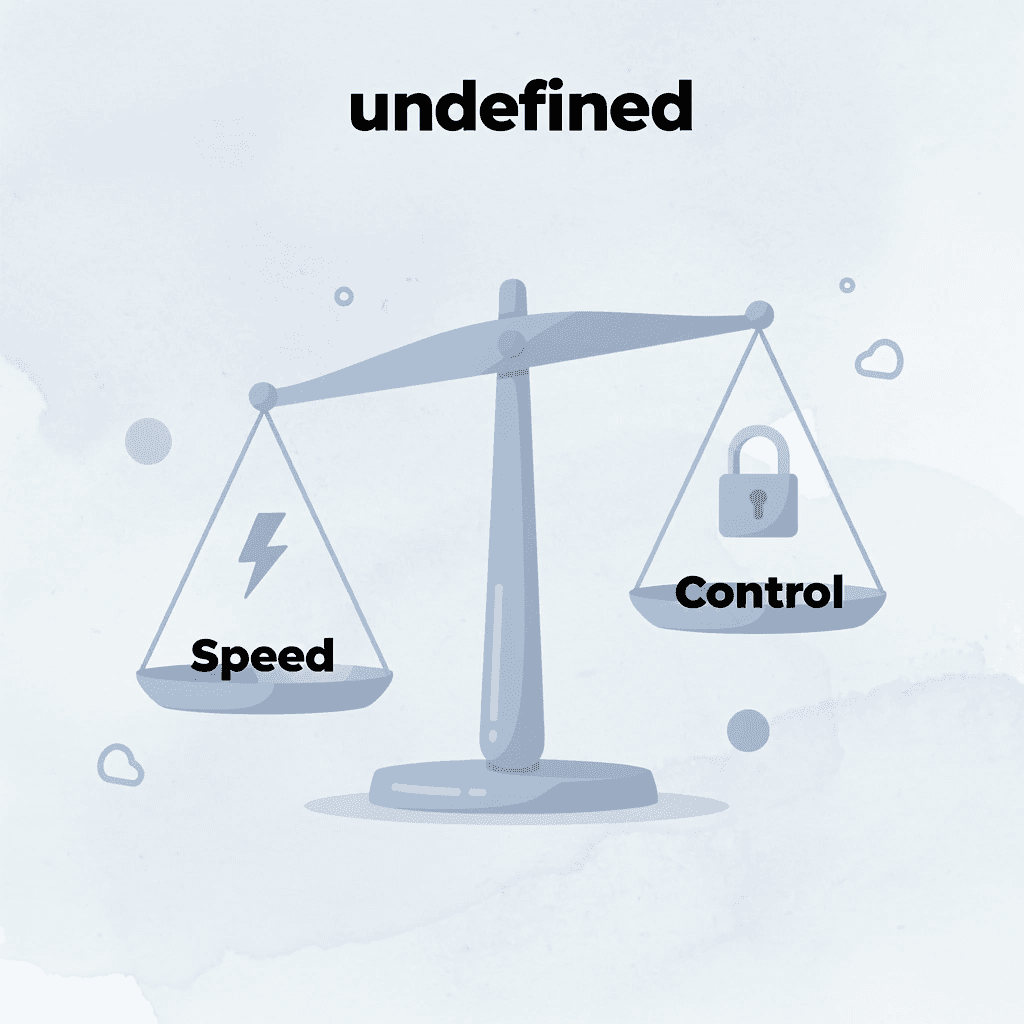
The biggest problem that stops most modernization projects is not the old code itself, but the belief that moving faster means losing control, which shapes every choice that follows.
"The real barrier to modernization isn't legacy code — it's the fear that speed and control cannot coexist."
💡 Tip: Recognizing that speed and control are not mutually exclusive is the first critical step toward breaking the modernization deadlock.
According to DreamFactory's Legacy System Modernization Statistics, 75% of IT budgets are spent on keeping legacy systems running. That budget pressure creates a trap: organizations cannot afford the risk of a failed modernization project, so they delay, patch, and find workarounds until the system becomes critically fragile. Waiting makes the eventual move more expensive, not less.
|
Modernization Strategy |
Risk Level |
Long-Term Cost |
|---|---|---|
|
Delay & Patch |
🔴 High |
Increases over time |
|
Incremental Modernization |
🟡 Medium |
Manageable & predictable |
|
Proactive Modernization |
🟢 Low |
Lowest total cost |
🔑 Takeaway: When 75% of IT budgets are consumed by legacy maintenance, organizations are not investing in growth — they are paying a compounding tax on inaction.
⚠️ Warning: Every year spent delaying modernization doesn't reduce risk — it amplifies it, making the eventual transition significantly more complex and costly.
Where does legacy software modernization typically break down?
The failure point is usually the gap between what AI can create and what production systems need. Automated code conversion tools produce output quickly, but a converted COBOL module that compiles differs fundamentally from a Java Quarkus service that handles real transaction volumes, maintains business logic accuracy, and integrates cleanly with downstream systems. CodeGiant's modernization pipeline closes that gap by combining logic extraction, dependency resolution, and type verification into a governed sequence. Teams that previously spent months manually porting a single module can now complete the same work in days, with full traceability at every step.
How does a governed integration engine reduce the hidden cost of legacy systems?
Most teams handle integration by building custom connectors between legacy systems and modern platforms. As environments expand to include Salesforce, Snowflake, ERP platforms, and real-time data sources, those connectors become a maintenance burden rivaling the legacy system itself. Our enterprise AI platform addresses this by connecting to hundreds of enterprise platforms via a governed engine, enabling real-time synchronization without requiring custom integration for each new data source.
The same pattern shows up in workflow automation. Legacy environments accumulate brittle scripts and manual approval chains that teams avoid modifying due to the real consequences of failure. When automation can be designed using natural language prompts and deployed to AWS, Azure, or Google Cloud with a single click, the risk calculation shifts. Teams stop treating automation as a special project and start treating it as standard practice.
What makes legacy software modernization a competitive strategy rather than a crisis response?
DreamFactory also reports that legacy modernization projects can reduce operational costs by up to 30%, but this requires treating modernization as a governed, continuous process rather than a one-time event. Enterprises achieving these results extended existing systems, built new capabilities on top of current foundations, and maintained compliance and reliability throughout. This distinction separates modernization as crisis response from modernization as competitive strategy. The question most teams never ask is what becomes possible once the governed process is running.
Try CodeGiant's Enterprise AI Platform Today
Teams that complete even one modernization cycle while keeping full compliance find that the next one moves faster, costs less, and carries less risk. This compounding effect depends on building a foundation designed to extend rather than replace — a distinction that shapes long-term outcomes.
"The compounding effect of modernization means every completed cycle makes the next one faster, cheaper, and lower risk — but only when built on a foundation designed to extend, not replace." — CodeGiant Enterprise Insight
💡 Tip: Don't wait for a perfect modernization plan. One completed cycle builds the institutional knowledge and infrastructure that make every future cycle more efficient.
🔑 Takeaway: The goal isn't a single transformation — it's a self-reinforcing pipeline where each modernization milestone compounds into the next.
Our enterprise AI platform automates assessment and migration pipelines with logic extraction, dependency resolution, and direct COBOL-to-Java conversions — turning months of manual work into days of traceable progress. Our App Builder, Agent Builder, and Workflow Builder extend existing stacks with production-grade apps and AI agents that connect to systems already running the business.
|
Builder Tool |
Core Function |
Key Benefit |
|---|---|---|
|
App Builder |
Extends existing stacks with production-grade apps |
Faster delivery without rearchitecting |
|
Agent Builder |
Deploys AI agents into live systems |
Intelligent automation on day one |
|
Workflow Builder |
Connects tools and pipelines end-to-end |
Unified operations across your stack |
One-click deployment across AWS, Azure, and Google Cloud maintains strict compliance across finance, healthcare, and government — without sacrificing speed or control. Start your modernization pipeline at codegiant.io with no signup fees and immediate results.
🎯 Key Point: COBOL-to-Java conversions, one-click cloud deployment, and compliance-safe pipelines are all available out of the box — no lengthy onboarding, no hidden costs.
✅ Best Practice: Leverage all three Builders — App, Agent, and Workflow — to ensure your modernized stack is extensible, connected, and ready to scale across AWS, Azure, and Google Cloud from day one.
Related Reading
- Application Modernization Roadmap
-
Insurance Legacy Modernization
-
.net Modernization
-
Enterprise Architecture Modernization
-
Cobol Replacement
-
Iseries Modernization
-
Application Modernization Benefits
-
Rpg Modernization